



Internal action plan for the environment, resources and social issues
Protektor develops and manufactures building profiles for the European market. This plan brings together initiatives designed to gradually improve our processes, materials and products in accordance with environmental, social and economic requirements.
We regard sustainability-related issues as an integral part of our corporate development. To this end, we examine selected business processes to determine how resources can be used more efficiently and how materials can be selected more carefully to reduce environmental impact. Where relevant evidence, key performance indicators or certifications are available, we make specific statements regarding individual measures, products or sites.
Our internal action plan brings together the projects described below relating to material use, energy, production and social issues. The programme is not an independent certification and does not, in itself, demonstrate environmental performance.
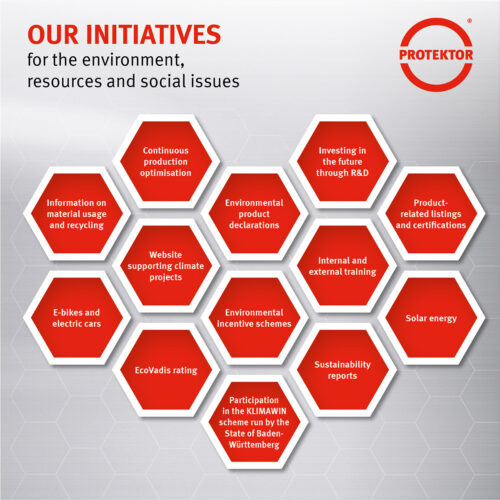
 PROGRAMME OVERVIEW
What is part of the internal action plan for the environment, resources and social issues?
For manufacturing companies, material use, material cycles, energy consumption and production processes are key areas of focus. Our plan highlights areas in which we are reviewing, developing or implementing relevant measures. It is an internal plan designed to present and summarise ongoing activities.
Solar energy – We invest in renewable energy.
We use renewable energy sources, amongst other things, to meet our energy needs. These include a solar installation covering an area of around 3,000 m² on our factory premises in Gaggenau, as well as our investment in a Spanish solar park. At the Gaggenau site, Protektor operates a photovoltaic system with a capacity of 344 KWP and an annual output of 350 MWh. Our stake in the Jerez Montealto solar park is described separately and is not attributed to the site’s electricity consumption or to any product impact. Where reliable data and reference periods are available, we report the extent to which these measures reduce our electricity consumption or our CO₂ emissions.

Information on material use and recycling – We follow the R-strategies.
Protektor uses the R-strategies as a guide for more efficient use of resources and greater recycling of material. For many years, we have been working on processes designed to reduce material usage in production.
In production, we employ, amongst other things, specially developed cutting, forming and folding techniques which, depending on the product and production stage, can reduce material usage compared with a specifically designated reference design. At the same time, lighter beads can make handling easier for specialist application companies.
MAXI-TEC beads achieve the specified stability through a folding technique that uses less material than the respective reference model. Other life cycle phases are not included. For this product, we were granted the Environmental Technology Award of Baden-Wurttemberg (“Umwelttechnikpreis von Baden-Württemberg”) and the German Raw Materials Efficiency Award (“Deutscher Materialeffizienzpreis”).
Certificate: 100 Companies for Resource Efficiency (German)
Reducing material usage whilst maintaining the same technical requirements can be a goal of product development. To this end, we utilise, amongst other things, structural design and finite element analysis to optimise structures in terms of material properties and material usage, and to reduce the use of primary raw materials, provided that the required physical properties are retained.
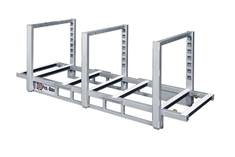
Our Pro.Box pallets are designed for multiple uses and can reduce the need for new wooden pallets. The 2025 model calculation is based on 5,633 shipments and the assumption that each shipment replaces a single-use wooden pallet weighing 72.5 kg. This results in an estimated 408 tonnes of wood mass avoided. The production, repair, transport and disposal impact of the steel box are not included in the calculation.
In 2024, we were nominated for the Environmental Award of Baden-Wurttemberg. Watch the video.
We are constantly optimising our manufacturing processes.
At its main site in Gaggenau, Protektor uses an energy management system certified to DIN ISO 50001. The system records defined energy, utility and status data at the site and helps to identify opportunities for optimisation. The certification body, certificate number, scope and validity are set out in the linked certificate.
Reported improvements are communicated only with the relevant underlying key performance indicator and the corresponding base and reporting periods.
Internally, the Process Optimisation Team and the Innovation of Engineering Team are responsible for measures aimed at further developing our processes and products.
Environmental Product Declarations – We disclose information.
We provide valid Environmental Product Declarations (EPDs) for the specified products. These contain quantified environmental information for defined life-cycle modules in accordance with the product category rules set out therein. An EPD is not a sustainability certification. The declaration number, programme owner, validity period and products covered are set out in the relevant EPD.
Product-specific listings and certifications – We have selected products certified.
Selected Protektor products are listed in the SHI database. The relevant SHI product passport specifies, on a product-by-product basis, which pollutant requirements or criteria relating to QNG, DGNB, BNB or BREEAM are documented. The product list, criteria status, validity and evidence are set out in the relevant product passport.
We support climate protection projects to offset the emissions calculated for the operation of our website.
The expected carbon footprint for the operation of our website has been calculated based on the servers we operate, the data traffic between users and the server, and the energy consumed by our website visitors’ devices during a visit. Protektor supports the listed climate protection projects to offset this calculated amount of CO₂ emissions. This does not imply that the website is carbon-neutral or that its emissions have been reduced.
We participate in environmental funding programmes.
Protektor participates in environmental programmes and research projects, including ‘Sustainable Production of Plastic Products’, FLoW-mIT and CLiCE-DIPP. The aim of these projects is to develop approaches for more resource-efficient processes and potential reductions in greenhouse gas emissions. We make statements regarding specific savings only where reliable project results are available.
In the field of plastic profile production, we are examining and implementing measures such as improving the efficiency of the cooling system, a soft-start control system and time-controlled regulation of the mixing plant, a reduction in the amount of blowing air used, and the potential use of a raw material derived from biomass.
As part of CLiCE-DIPP, Protektor is participating in a project that examines data and potential solutions for reducing greenhouse gas emissions. Product-related CO₂ data is to be stored in a product passport, provided that the data is available and methodologically defined. The focus here is on raw material data and manufacturing.
As part of the FLoW-mIT project, Protektor helped develop a company-specific trend radar and investigated organisational and technical adaptation options. The points considered in the project are research questions and do not constitute committed environmental performance targets.
Investing in the future – We are investing in the further development of our processes with regard to the environment, resources and social issues.
At Protektor, employees can help shape the future. Through PRIIMA (Protektor Ideas and Innovation Management), they can submit ideas and suggestions for improvement, including on environmental and social issues. Submitted proposals are assessed according to internal criteria.
Through PIP (Protektor Innovation Programme), employees also have the opportunity to submit product ideas – whether for in-house production or retail goods. The PIP committee decides whether the idea has the potential to become an innovation. Remuneration is paid annually on the basis of the contribution margin achieved over a period of three years.
Protektor employs apprentices and students and runs various training programmes. Key figures on the employment structure and the number of apprentices taken on are reported for the respective reporting period.
In the social sphere, Protektor implements measures in areas including health and safety at work, the protection of human rights, equal opportunities, the prevention of discrimination and exploitation, inclusion, equality and diversity, as well as training and further education.
Selected facilities and benefits for employees include, amongst others, a works council and youth and trainee representatives, in-house health and safety, the Protektor Academy, electric car leasing, Job Rad, corporate benefits, and further training and professional development. Further measures include, for example, representation for employees with severe disabilities and the use of interpreters during safety briefings and staff meetings.
Internal and external training – we have our own academy.
Training for our customers, partners and staff is an integral part of our internal development. At our Protektor Academy, we share specialist knowledge on planning and construction, including more efficient workflows, the prevention of structural damage and the durability of our products. In 2025, over 3,000 people took part in the Academy’s events; more than half of them were architects, planners and engineers. Workshops, seminars and webinars cover topics such as the prevention of structural damage and more efficient working practices.
Protektor participates in the EcoVadis rating scheme.
The scorecard assesses the criteria set by EcoVadis within the scope of the company and the defined assessment. The current score is 61/100 and was assessed in August 2025, with validity until August 2026. By comparison, the score in 2024 was 50/100. Please note that the assessment is not a product-related sustainability certification.
View the current scorecard (German)
Participation in the KLIMAWIN scheme of the State of Baden-Württemberg.
Protektor participates in the KLIMAWIN scheme run by the State of Baden-Württemberg. KLIMAWIN is a voluntary sustainability management system for businesses. By participating, Protektor commits to the initiative’s guidelines and works to integrate environmental and social aspects more closely into its corporate management. Implementation takes place within the framework of the defined measures and reporting obligations.
Certificate of membership (German)
E-bikes and electric cars – we promote lower-emission mobility options.
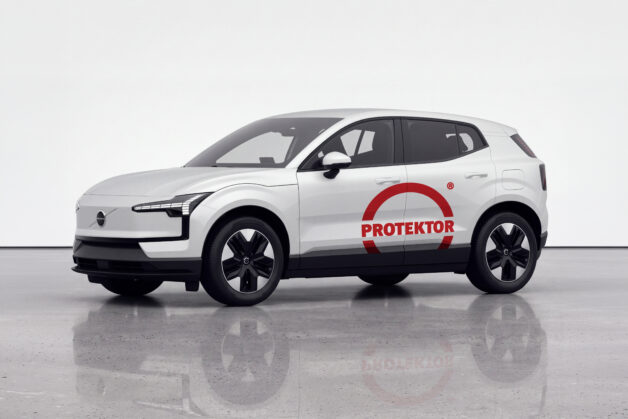
Protektor offers staff the option to lease e-bikes (Job Rad Leasing) and electric cars. By doing so, we create incentives for modes of transport that can result in lower local emissions than vehicles with internal combustion engines at our sites. The actual environmental impact depends on various factors, including usage, the source of electricity, the type of vehicle and the chosen benchmark. Currently, around 70 electric Volvos are in use as staff vehicles.

INTEGRITY NEXT
For an instant overview
Protektor is registered on the Integrity Next platform. Find key information right here, instantly.